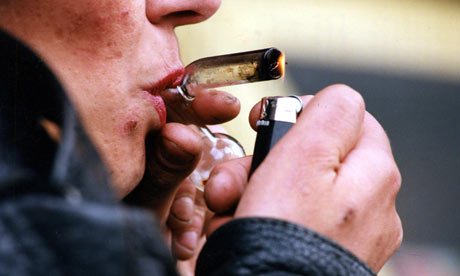
what addiction

Addiction or dependence is a disorder of behavioral repetition appears to act by the individual to a particular activity are busy regardless of the harmful consequences of an

The Solution to Addiction

Solving the problem of addiction means that steps are taken to reduce the consequences of particular behaviors, and that at the same time, actions are taken to...

Internet Addiction Self Test

Internet Addiction Self Test 8 Question Internet Addiction Test Do you

This is default featured slide 4 title

Go to Blogger edit html and find these sentences.Now replace these sentences with your own descriptions.

This is default featured slide 5 title

Go to Blogger edit html and find these sentences.Now replace these sentences with your own descriptions.

Sunday, May 26, 2013

New Fruit Addiction


There has been some recent buzz in Hollywood about a so-called "strawberry cocaine." TMZ did some crack investigating and got the low down on the blow. 

New Fruit AddictionFlavored cocaine is nothing new, we're told. Law enforcement sources tell us that since the 80s people have been buying coke in all sorts of flavors, including rum and cherry, and now it appears strawberry is back and all the rage. 

Law enforcement sources tell TMZ that strawberry flavoring is added to the drug to give it its fruity flavor. Years ago just adding food coloring was a big thing-- brown and red cocaine were the talk of the town. Theoretically, you could make or add any flavor you'd like to the drug.

Hollywood insiders tell TMZ that this drug has exploded in the club scene, and not only has cocaine made a huge comeback, the strawberry version is definitely rearing its ugly head again. Like leggings and skinny jeans, this dangerous pastime is back full force. 

fruit addiction


Every morning bright and early at 3:30am Heather and I dive into our breakfast meals. It is very strange to be eating full blow breakfast at 3:30am, but we really don’t have any other opportunity during the show to snack. Both Heather and I eat yogurt and fruit often, but we are starting to work in some fruit salads into our morning routine!
fruit addiction

One of my favourite summertime fruits is watermelon! It is the best ingredient to a fruit salad because of the bright pink color and sweet flavour! You could be fooled if I made you a fruit salad because of the “Cream of Saskatchewan” Watermelon! Talk about a sugar high, it is far sweeter than any watermelon you will ever taste and is a glowing white color. It is a Heritage Plant and hard to find in our neck of the woods, but if you can get your hands on one! It will become a family favourite fruit!

Thanks Larry for the welcomed introduction to my new fruit addiction!

Wednesday, May 22, 2013

quit addiction

How To Quit An Addiction

quit addiction

While I myself have never experienced what most people would call major addictions, there have been times in my life where I've had to face my own poor decisions and decide what to do. In these times, I had to learn about bad addictions the hard way, and to put it bluntly, it stunk. If you don't want this to happen to you, continue reading for a step-by-step guide on how to quit an addiction that you've had for any length of time.
I could go off on a long spiel about how not getting started with a bad habit is the best way to quit. However, I feel that would be cheating you, because if you haven't started yet, why would you want to quit? That's not advice, that's just saying that you're stupid, which you aren't. Having an addiction doesn't mean you're stupid, it means you made a bad choice, something any human will do over and over again. If you have admitted it, you're even better off. Admitting you have a bad habit is something that takes guts and brains, which the people who will tell you you're stupid obviously don't have.
I will attest to the fact that the longer you've been at it, the harder it will be to kick the habit. The good news is, the harder it will be to stop, the better you'll feel about yourself once you've succeeded. Believe me, you can succeed. I'm not saying my guide will guarantee your success. In fact, my guide in itself is nothing. What CAN guarantee you success is partly the fact that you're reading this right now. You obviously WANT to quit, which is the first step to quitting. If you don't want to quit, it will be nearly impossible for you. However, with the right attitude and amount of effort, you can accomplish anything, let alone quitting an addiction that is hurting you.

Step 1: Facing The Addiction

The first step to quitting an addiction, you've partly accomplished. If you're reading this and you have an addiction you want to get rid of, you're halfway there. You've realized that you NEED to quit. In order to begin quitting, you must first:
A. Acknowledge that you HAVE an addiction.
B. Be aware of the fact that it is HURTING you.
C. CRAVE a time in your future when you will no longer be addicted.
D. Develop this craving so that it is STRONGER than the cravings your addiction causes.
Once you've done these four steps, you'll be ready to move on to step two. Sometimes the hardest part is for people to realize that they are hurting themselves and need to quit. If you know someone who has an unhealthy habit, the best way to approach them is not to bug them constantly about it, but to present yourself and your own healthy lifestyle to them in an enticing manner. Make them want to quit. If they don't want to quit, chances are nothing you do will convince them, especially if you bug them to death. The person with the addiction must accept it in order to move on. This is what step one is about. When you are addicted to something you must face the addiction in order to beat it.

Step 2: Reducing The Addiction

Once you have faced your addiction and are confident that you can beat it, you can begin reducing your addiction level. This must be done or else you'll always return to exactly where you were before, which accomplishes nothing. If you suddenly drop everything, the withdrawal symptoms will usually make you miserable, depending upon your addiction. The cravings will most likely become painful and/or traumatic, and you will nearly be forced back into the habit. This is not the best way to go about it. It might be the quickest way, but it will be much more difficult. I'm not saying that detoxification (for drug problems) doesn't work or is not a viable option--but you should probably try something less stressful first.
To reduce the addiction, you need to GRADUALLY lower everything that causes, and everything that is caused by, the addiction. For instance, if you're a smoker and you want to quit, but seeing cigarettes makes you want to buy them, you need to avoid the drug section in the supermarket. If eating chocolate (for some odd reason) causes you to want a cigarrete, then remove chocolate from your diet ENTIRELY. Any little things like this you can do, do FIRST and keep doing them so that it becomes that much easier to quit as you progress. Write yourself notes if you have to, but remember to consistently avoid things that cause cravings.
Secondly, you also need to gradually lower the activities caused by the addiction--that is, the habit itself. If you're a smoker, for instance, set limits for yourself. Decide on a certain amount you'll allow yourself every day, and keep at it for, say, a month. Then, lower it a little bit more. If a month seems too long or too short, then by all means, adjust as needed. You need to get more in tune with your body's own rhythm of adaptation, which will determine how gradually (or how fast) you're able to reduce your addiction.
So, step two, in a nutshell, is to first eliminate the causes of cravings, and second, lower the amount you indulge in your cravings. Never allow yourself to fall into the "just one more" rule. If you allow yourself one more, that punctures all the work you've done in the past. Remember that quitting is about quitting, not about giving in to yourself. You must conquer your cravings and learn to control what your body thinks it needs.

Step 3: Filling The Gaps

The third and final step to quitting an addiction is to FILL THE GAPS. You will most likely find a lot more time on your hands now that your habit is slowly tapering away, time you would have usually spent on the bad habit. What you need to do now, instead of feeling sorry for yourself and THINKING about your cravings is do the exact opposite. Fill in the gaps with NEW activities and ways to be HEALTHY. There are plenty of things you can do with the new free time you'll have, and these will make quitting all that much easier. A few suggestions are listed here:
-Take a walk (finding someone to walk with may help)
-Read all the books on your reading list (if you have one) or ask friends for good books to read
-Study the bible or get involved with a study group (an out-of-church activity)
-Spend time with family and friends (play games together, go to shows, watch movies, etc.)
-Take up an instrument (learn guitar, piano, or another instrument--now days, teaching yourself is easy)
-Get yourself a hobby, or revive an old one (make crafts, be artistic)
I'm sure you could list a dozen more good activities, and they would all be just as healthy and time-consuming. Make sure that you stick with it and don't give up. As things get better and better, you will most likely feel better and find enjoyment in things besides your addiction, and it will slowly but surely disappear. I wish you the best of luck in your endeavors!

4 way nasal spray addiction


Nasal sprays can stop snoring and provides fast reduction, but they don't seem to be a extremely good lengthy-term solution. Snoring is merely a symptom of a deeper underlying health downside, and till you handle the foundation cause, you will never eliminate snoring completely. If you would like to eventually cease using nasal sprays, you'll want to take into account taking a new pure food supplement just like the Acai berry.
One of many leading causes of continual snoring is obesity. Merely being chubby makes you extra prone to snore, since all that extra weight tends to bear down in your throat and windpipe. Being overweight can also worsen your loud night breathing situation, turning it into full-blown sleep apnea.
Sleep apnea is a situation where, throughout the evening, your windpipe closes and cuts off respiratory for more than a few seconds. Your oxygen-starved brain ultimately wakes you up with a cough or loud snort, however solely to reopen the windpipe for a brief while. Because you never get any deep sleep, you wake up very tired.
What's worse, sleep apnea usually cannot be detected, particularly whenever you reside alone. While you do get up every time your windpipe closes, you by no means grow to be totally conscious. You typically get up with no memory of your respiratory bouts -- you just marvel why you are feeling so tired.
To avoid snoring and sleep apnea, embody Acai berry in your each day supplement regimen. Acai berry has helped hundreds of people maintain best physique weight ranges and stop obesity. With Acai in your weight loss program, you may do away with any further weight weighing you down, and you will get pleasure from new energy each single morning.

Addiction to addiction

Addiction to addiction

I grew up in scotland and was greatly influenced by my father whom i admired and loved greatly. He never smoked,drank sensibly, but gambled almost everyday. I resisted smoking until my late teens when i joined the RAF and fell in with what in those days was just the thing to do. I ended up a very heavy smoker (even though I was an athlete,and a good one) and soon after started drinking,slowly at first, but after a few years I was a very heavy drinker also. I stopped smokning cold Turkey when iwas 29 and did it by visiting bars and drinking coffee and tea as i was told that would make me start again. I did not smoke ever again,which in some respects indicates a strong will. I still drank heavily and started gambling ( I had done some in the past but was not hooked at that time)as the excitement and adrenalin rush was euphoric at times and I would actually lose cotrol of my composure during a race i had gambled on. At this stage gambling was reasonably under control.I was away on busines many years ago when i went to a dance and met a women(I was drunk ,I think she had too many also) ,I was married at the time but I went back to my room with her and we had sex. I woke up the next morning horrified at what I had done and was really ashamed. My wife had travelled to visit me that day and she somehow Knew what i had done. It was a bad and a good event,my marriage survived but at that time I vowed to give up drinking and I have never touched a drop since (another indicator of strong will?) For whatever reason after I stopped drinking my gambling increased ten fold and that was over 25 years ago.I have had up and down start and stops but i am now really worried about my ability to stop.I have spent at least $250000 (probably more).I am in my 70s now and although I am not poor I will certainly head that way soon if i cannot break this hols it has on me. I have survived,a stroke, dibilitating ear disease, and recently cancer so i am fighter . Question: how do I approach this addiction now? 

Addicted to Addiction !!

Addicted to Addiction !!

Our collective use of the word "addiction" is getting out of hand. What are you hooked on?
A quick Twitter search shows the absurd range of meanings carried by one word: “addiction.” Pain-med addiction in the NFL and Charlie Sheen’s presumed addictions fit the medical definition, but apparently cupcake enthusiasts suffer from a "cake tin addiction." Technology is an addiction magnet: People love to confess/boast about their addiction to YouTube, iPhone, Droid, Twitter, and CrackBerry. Others have low-tech addictions to tattoos, Gatorade, worrying, hockey, green tea, Shamrock Shakes, coffee, white chocolate, porn, American Idol, jazz, love, and Reggie Bush. This word covers everything from America’s gasoline intake to a psychotherapy-soaked update of a classic excuse: “My dog has a digging addiction and buried my homework.”  

Like so many words, the meaning of “addiction” has varied wildly over time, but the trajectory might surprise you. The common perception is that “addiction” was drug-centric at birth, before gradually spreading to broader and sillier stuff, like sex addiction and Internet addiction. In reality, it’s gone from broad to specific to broad, taking on and shuffling off many meanings. Addictions have always been with us, but a single, unified meaning of “addiction” is hard to score.

The ultimate authority on English language history, the Oxford English Dictionary, shows the first variation of “addiction” popping up in the 1500s. The term comes from the Latin addictus, and in Rome, being “addict”— originally an adjective—meant being forced by a judge to be a servant or slave, often because of debt. From there, “to addict” started meaning to voluntarily “bind or attach oneself to a person, party, or cause; to devote oneself to as a servant, adherent, or disciple.” The meaning of “addiction” then grew to mean a zealous, disciple-like devotion. You can see traces of this meaning in a classic Kramer rant to chocoholic George: “You may stray, but you'll always return to your dark master: the cocoa bean!” 

Also in the 1500s, “addiction” is first found with a broader meaning of “immoderate or compulsive” dedication or devotion to something, which is exactly like our current addictions to cinnamon rolls and Angry Birds. Not until the 1700s did “addiction” start to become substance-specific, and it took much longer for the William S. Burroughs sense to take hold. In Psychology Today, social/clinical psychologist Stanton Peele wrote an excellent piece on the evolution of addiction, noting that, “Only in the 20th century was it narrowed and restricted to the use of narcotics, specifically heroin. Any ‘expansion’ is thus a return to addiction’s traditional meaning.” 

Word maven Michael Quinion has more addiction history here, and a recent update to the OED filled in some blanks. Terms such as “addiction counseling” and “addiction counselor” didn’t pop up till the early 1970s, perhaps because of post-1960s drug awareness. We’ve been talking about Internet addiction almost as long as we’ve been talking about the Internet (or at least since 1994). Though Tiger Woods owns the term these days, “sex addict” goes all the way back to 1927, and the narcissistic “self-addiction”—custom-made for the Twitter age—is found in 1642. I love the term “over-addiction,” which is traced to 1662 and seems to mean “mega-addiction.” These days, we might call it an addiction-pocalypse.

With so many types and meanings of addiction, it’s always been a challenge for medical professionals to determine, as Peele writes in PT, “Just what does addiction refer to? Is it a brain disease? A behavioral pattern? Or is it a larger experiential pattern?” Medical tomes such as the Diagnostic and Statistical Manual are continually revised but Peele summarizes the key points for layfolk: “Addiction is the search for emotional satisfaction—for a sense of security, a sense of being loved, even a sense of control over life. But the gratification is temporary and illusory, and the behavior results instead in greater self-disgust, reduced psychological security, and poorer coping ability. That’s what all addictions have in common.” 

That's what all illness-type addictions have in common, anyway. I get plenty of emotional satisfaction from my daily fix of books like the OED and Green’s Dictionary of Slang. My word obsession hasn’t raised or lowered my ability to cope, and my level of self-disgust has held steady since Catholic grammar school. I guess I’m in the safe, general range of addiction rather than the medical danger zone.  

Unfortunately, I’m going to have to fulfill my jones to write about words elsewhere, because this will be my last weekly column for GOOD (though I’ll be showing up here from time to time). As fellow word guy Ben Zimmer learned when The New York Times suspended On Language after 32 years, it’s been a tough season for language columns. I hope you’ve enjoyed reading these columns half as much as I’ve enjoyed writing ‘em. My addictions to dictionaries, slang, jargon, euphemisms, and all forms of word nerd-dom will continue elsewhere. There’s no cure for wordlust. 

illustration by Sara Saedi

'Addicted' to Addiction

 'Addicted' to Addiction

So-called “Internet addiction” is back in the news. It’s not pretty. Consider arecent NBC Rock Center report from Brian Williams and chief medical editor Nancy Snyderman. It ended with both correspondents saying that when it comes to this new diagnosis they started off as skeptics but ended as “believers.” But in what? In what were they believing by report’s end? Furthermore, might that belief, rather than demonstrating a reasoned analysis that illuminates the problem, ironically show them to be “addicted” to addiction?
Those who follow “Managing Mental Wealth” know I’ve written about “Internet addiction” several times. So, let me say I’ve also just published an article for fellow professionals in the Journal of Clinical Psychology that investigates using the addiction-concept for understanding out-of-control Internet behavior. I argue you can’t solve new problems by relying only on old ideas, and that we need to better understand the new kinds of experiences people seek when immersed, for example, in online gaming. Only by knowing what people are actually doing online can we understand how things can go wrong.
Saying people “get addicted” risks killing curiosity with premature certainty. More specifically, believing that the diagnostic certainties of addiction can explain the very real, new, and quite perplexing problem of people getting trapped by online behaviors goes against current science and clinical experience. Neither current research nor clinical experience show that people who are in trouble online suffer from a behavioral addiction similar to, for example, gambling. [Here is an additional post for the science-mindedshowing how the research cited by NBC does NOT support an “Internet addiction” diagnosis, despite them claiming it does.]
If Mr. Williams’ and Dr. Snyderman’s new found belief was limited to the discovery that people really are struggling with pathological out-of-control Internet behavior then I would say, Bravo! Despite the skepticism of some, people are suffering: I’ve seen it in my practice; I hear about it from students and supervisees; when I present to professional audiences I hear more than a few horror stories; and, most important of all, there is good research documenting the problem. For example, a well-done 2009 nationwide survey of youths between 8 and 18 by Douglas Gentile of Iowa State University and the National Institute on Media and the Family found
“8.5% of video-game players exhibited pathological patterns of play as defined by exhibiting at least 6 out of 11 symptoms of damage to family, social, school, or psychological functioning.”
No question there is a problem that needs to be understood. But “addiction” is not currently the answer. So, the question becomes why do some become enthusiastic believers in addiction as the diagnostic explanation for the problem absent sufficient evidence? I think we need to consider two reasons.
First is the discomfort of not knowing. We like knowing what is going on, or at least feeling as though we know. When we don’t know, when we find ourselves in situations of perplexing uncertainty, we become anxiously uncomfortable, and anxiety undermines curiosity. Having a name—a diagnosis!—for something is soothing; it provides the feeling of knowing even when there is no knowledge to be had. A diagnosis can be seen as functioning like a cognitive painkiller to soothe the anxious-making uncertainty of not knowing: “Whew! Now we know!”  And like those who overuse actual painkillers, Mr. Williams and Dr. Snyderman have overused diagnostic certainty to the point that we can say they have become “addicted” to addiction.
The second reason is the complexity of the term “addiction.” It means different things when used by patients than it means when used by a doctor.
When patients say they are addicted to doing something online they are communicating an experience, and a pretty awful one at that. They are saying they feel trapped by impulses and behaviors they can’t control, even when they also see themselves doing incredible damage to their lives. Sometimes it’s with gaming, other times online porn, and I’ve even seen others who have had trouble with dating and hook-up sites. When they say “I’m addicted,” they are saying they feel and act as out-of-control and self-destructive as do junkies with a needle or a crack-pipe. By stating they are an addict they clearly communicate the abject suffering and out-of-controlness of the experience.
 'Addicted' to Addiction

But when a clinician uses the term it is meant as a diagnosis. It is an explanation for behaviors and experiences. It implies facts have been gathered and sorted in a particular way. It implies a body of research. And it suggests a particular cause, a prognosis, and recommended treatments.
Again, there is currently not enough data to establish that pathological Internet overuse should be diagnosed as a behavioral addiction, like, for example, a gambling addiction. Plus, clinical experience with patients who describe themselves as Internet addicts has been that they do not respond to treatment in the same way that, for example, alcoholics and substance-abusers do.
Might the problem be more like a compulsion than an addiction, more like compulsive hand-washing than alcoholism? Or maybe it comes from an impulse control disorder, or a problem with attention or judgement? Perhaps it is a symptom that can come from multiple problems? Or, as I have been arguing, might it be something new, a new problem emerging from the new experiences afforded by emerging technologies? Maybe it’s that people get confused, profoundly pathologically confused, and look to life on the screen for that which only life can fully provide. Maybe it’s that “screen relations” provide just enough life-likeness to keep alive the promise of having it all. Maybe, just maybe, pathological overusers are more like early moviegoers who fled theaters on first seeing moving images of a rapidly onrushing train than they are like drunks and junkies.
We need to keep the maybe alive because we don’t know. We need to keep curiosity alive, especially as technologies develop and emerge. We do not need journalists closing down the process of not knowing. What we do know is that NBC, Rock Center, Mr. Williams, and Dr. Snyderman did us all a disservice, especially those suffering from out-of-control Internet behaviors.

Addicted to addiction

Addicted to addiction

The tabloid media seems to be hooked on addiction, there is no more inane opportunity than to climb aboard the soapbox gravy train or flog the old, dead sawhorses. But, there’s a lot of nonsense talked about addiction. Amy Winehouse recently succumbed to withdrawal and so unfortunately joined several other musicians, including Jimi Hendrix, Kurt Cobain, Jim Morrison, Janis Joplin and Brian Jones as the latest recruit for the “Forever 27 Club”, a name that almost glamorises their deaths and certainly bumps up record sales. Meanwhile, the tabloids were also pre-occupied with the death of a young man who suffered the fatal consequences of a deep-vein thrombosis having spent more time than was really good for him playing video games day in, day out.
It is easy to hook a rant on the notion of addiction. After all, there are so many things to be addicted to, aren’t there? Narcotic drugs such as heroin, of course, chocolate, potato chips, the gym, bungee jumping, tobacco, over-the-counter painkillers, caffeine, golf, sex, work, pornography, even the internet and Twitter or Facebook. The media and consequently people in general will talk flippantly of workaholics, sex addicts, chocophiles and others. Technically, however, many of these urges, labelled as addiction are not, despite the problems they might bring, truly addictions in the sense of brain chemistry, they’re commonly merely (bad) habits. They are habits to which those who yield feel they have surrendered. But, while it might be facile to say that someone who eats a large amount of chocolate or drinks a lot of coffee is somehow an addict, addiction is much more complicated than that.
Addicted to addictionEven, the notion that simply using a drug, whether cocaine, alcohol, or whatever means an inevitable descent into addiction is something of a myth. Many, many people “use” without ever becoming addicted to their “drug” of choice, whether that’s a spin on the overtime hamster wheel, the exercise bike or the roulette wheel. They might even reach the point where their habits consume more of their time, money and concentration than any other activity in which they take part. But, even then taking their “drug” to excess is not necessarily their being addicted.
So, what is addiction? It is almost impossible to define. Not all of those who indulge in a drug habitually are addicted but all addicts use their drug habitually. Is addiction tolerance? The idea that to experience the same “high” the person needs a gradually increasing levele of exposure to their drug. Or is it dependence where absence of their drug leads to the unpleasant symptoms of withdrawal? Is there actually a difference between what one might call psychological addiction or physiological addiction? Many users keep indulging their habit to avoid the unpleasantness of not taking the drug rather than the pleasure of taking it. That seems to apply whether they are snorting cocaine or shuffling virtual chips in an online poker game. How far down do you have to go between highs before it is called an addiction?
Addiction is not just about the ups and downs, and more importantly it is not an affliction of the down and out and/or the rich and famous. It might be that those are the people with whom the tabloids flirt the most. However, reaching a position in which an uncontrollable chemical imbalance in the brain constantly urges a person to seek their fix, is something from which no one is immune. We all have our bad habits and irrepressible urges. But, the flippancy with which terms such as workaholic or sex addict are bandied about in the tabloid media belies a much more insidious problem. The problem that the disease we refer to as addiction destroys lives in ways that are way beyond such flippancy.
Addiction does seem to go hand in hand with certain mood and anxiety disorders. It is wholly unclear as to whether or not one leads to the other or indeed whether there is a genuine causal link in either direction. But, mental illness does seem to correlate with raised dependence with many pundits believing that addiction arises through self medication. Richard A. Friedman MD writing on Amy Winehouse and addiction in the New York Times in August 2011 concluded that genes, environment and psychology are all at play in determining who will become addicted to what.
Addicted to addictionSo much, so obvious. There is no way to unravel the complex relationship between one’s genetic inheritance and one’s environment. Additionally, as to how it could physically be possible to talk of the psychology of addiction without discussing its neurochemistry, I do not know. What is clear is that the tabloid hyperbole and scaremongering surrounding those illicit drugs that society fears the most needs a detailed re-assessment, as does the nature of addiction in realms such as gambling and with other non-chemical stimulants. This is especially important given the flippancy with which the terminology of addiction is applied to problems that seem not to be related to addiction but are simply bad habits.
Addicted to addiction

Why addiction to addiction

 addiction to addiction

Why   addiction to addiction
Becci Matheson is tall, impeccably dressed and perhaps just a little too slim. In an earlier age, with her highlighted blonde hair and cut-glass accent, she would have been called a Sloane Ranger. Indeed, she did go to the same prep school as Princess Diana.
Her father is Jeremy Hindley, the top racehorse trainer and British Home Stores heir, and Becci, now 30, inherited a cool quarter of a million on her 21st birthday.
But despite the looks, education and privilege that her happy upper-class life has bestowed upon her, Becci's story to date is one of chaos, fear and, at times, sheer squalor.
In a desperate attempt to find happiness, she has ricocheted from drug abuse to excessive drinking to food and shopping binges. She is, as she admits with startling candour, addicted to addiction.
'People ask what I am addicted to, and I have to say: "Do you want a list?" Since the age of 18, I have been hooked, at various times, on cocaine, food, dieting, laxatives, cigarettes, shopping, anti-depressants, painkillers, exercise and even work.'
Disturbingly, Beccci's story is far from unique. She is one of a growing number of young people who squander their youth and health on a dangerous rollercoaster of reckless, compulsive behaviour.
Becci's complex relationship with food developed into anorexia - prompted, she says, by an older boyfriend who taught her to associate attractiveness with being thin.
Likewise, her growing drug problem developed. Disturbingly, Becci says almost all her friends were regularly taking drugs from the age of 18.
'I'd already tried LSD and cannabis at parties, and as the rave culture took hold in our corner of East Anglia, I began to take Ecstacy regularly at weekend raves, staying up all night until 6 am.'
Becci's addictions were rapidly spiralling out of control. Though she may have been in denial about them, her friends weren't - and when one confided in her parents, they arrived in London for an emotional confrontation.
'I denied everything and insisted I was fine,' recalls Beccci, 'but within days they had booked me into a treat-ment centre.'
It was to be the first of many failed attempts to battle with her inner demons. Although she saw the best counsellors and psychiatrists that money can buy, nothing seemed to work.' Meanwhile, Becci's addiction to exercise began. She was managing to hold down a secretarial job at an investment management company, but beneath the happy-go-lucky image she was more miserable than ever.
'I was addicted to exercise, cigarettes, laxatives and starving myself, as well as getting increasingly hooked on cocaine.'
As if things weren't grim enough, Becci then developed another craving - for shopping.
'At the time, it seemed like an innocent way to cheer myself up. I would go out every single lunchtime and buy something new .. . a pair of shoes from Patrick Cox, trousers from Joseph, a new top from Jigsaw. I probably spent between £50 and £100 each time.
'It got to the stage where I was obsessed with never being seen in the same outfit twice.
Meanwhile, Becci's drug addiction was was taking an ever more serious hold. By the age of 22 she had a serious cocaine habit. 'Cocaine was - and is - rife in so-called polite society,' she says. 'I wasn't unusual in taking it at all.
'In the end, I became so desperate and unhappy that I attempted suicide on cocaine and laxatives.
Really, it was a cry for help. I was only 22 years old but I felt that I was living a completely cursed life, an endless round of lies, overdrafts, hangovers and binging and purging on food.
'It was then that I decided to go travelling with my sister, to escape the nightmare that my life in London had become.'
'At first I felt incredibly liberated because I couldn't get hold of laxatives out on the hippie trail in South America. It was wonderful to be free of that compulsion.'
'Cocaine, though, was all too freely available, and as the trip wore on I also began to take laxatives again, bought from pharmacies in the big towns that we passed through. But still I kidded myself that I was in control.'
On the eighth month of her holiday, while in Venezuela, she met her first husband, an American multi-millionaire called Cameron.
Like Becci, Cameron was in his early 20s and part of the so-called 'slacker generation' - happy to live on inherited wealth and not interested in work for its own sake. Moreover, he also took cocaine.
Shortly after the wedding, Becci moved to Cameron's home town of Boulder, Colorado, hoping she would finally put her problems behind her. In fact, worse was to come.
'In an atmosphere of near-limitless funds, my shopping addiction flourished. I spent £60,000 on decorating our five-bedroom house. I imported hand-woven curtains from England, Fortuny lamps from Italy and spent £7,500 on a hand-carved cherrywood bed made especially for us in Denver.
'Even worse, though, was the amount we spent on drugs. At first we took cocaine only at weekends but it soon spiralled out of control.
'I also started drinking heavily. I'd have one vodka and tonic . . . and be unable to stop. It got so bad that I'd have alcoholic blackouts, unable to remember anything that had happened the night before when I woke, hung over, dehydrated and deeply miserable between my designer linen sheets.
Thirty-two-year-old Hugo is now Becci's second husband. A chef who once worked at the River Cafe with Jamie Oliver, he too comes from a privileged background. His father worked in the City and then went on to farm 200 acres in Devon.
But despite her happy marriage, Becci's demons were still lurking. Having decided to become a photographer, she became a workaholic, putting in 70 hours a week. And although she was free of illegal drugs, she had become hooked on anti- depressants and painkillers.
'I was anorexic, bulimic, hooked on shopping, addicted to anti- depressants and painkillers, and working flat out. It was a recipe for disaster.'
'One dday Hugo found me lying on the kitchen floor, sobbing and banging my head on the fridge door. He knew then I couldn't go on like that. He suggested I should go into rehab - and I am so grateful that I have been given a second chance.'
Becci believes she has a medical condition which is the root of all her problems. 'My illness is cross-addiction. I seek out anything and everything that will get me high and alter my moods,' she explains.
There may, indeed, be a genetic component to addiction but the truth is that in today's frenetic consumer society, where anything and everything is for sale, it is all too easy to live a life fuelled by excess.
Becci is all too aware of this paradox. 'I'm sure people look at me and just see a spoilt little rich girl - and yes, they have a point.
'I've had far too much money and freedom in my life, and to a great extent that has been my undoing. But I do firmly believe that addiction is an illness and has to be tackled as that, not as a moral or spiritual weakness.'
 article : Why   addiction to addiction  

The Solution to Addiction


Solving the problem of addiction means that steps are taken to reduce the consequences of particular behaviors, and that at the same time, actions are taken to enhance (or optimize) life and bring about permanent change where addiction really is no longer an issue. Within this framework of intervention, there are many avenues of change, as well as different endpoints of the change process. For some, abstinence from particular behaviors like injecting heroin or smoking crack cocaine are necessary and appropriate endpoints, but for others, social drinking, or developing healthy relationships with sex and food may be just as appropriate. Either way, if you are to succeed in solving the problem of addiction, it is necessary to identify and address all of the various issues that interact with addictive behavior and perpetuate life problems: depression, anxiety, homelessness, domestic violence, debt, physical health problems, legal issues, unemployment, etc…
To get started, first read about the need for thinking about intervention “long-term”. Then explore how we go about identifying all the addictive behaviors and co-occurring issues in “evaluation and assessment.” Next, the intervention process is broken down into five factors. These factors are not necessarily sequential, and represent buckets of work that very often require attention throughout life. For example, learning to optimize life is a moving target, because what fulfills us in our 30′s many not be what we want or need in our 60′s [usually it's not]. Likewise, addictions and a number of core issues may require management to varying degrees throughout life, often rearing their ugly head during times of significant stress. Understanding these factors will take you a long ways to successful long-term outcomes.
The Solution to Addiction